new project of Willhelm Grasslich from <Uncle Grash's Flying Circus>. definitely worth your attention

mercoledì 27 luglio 2016

martedì 26 luglio 2016
Sounds from underground/File N°047
<<Dogless>>. I'm just listening it from few days and can't stop. why? because it's so genuine and good. and the melodies are great. I'm not looking for more.
0. name of the band
Dogless
1. where are you from?
I'm originally from the Detroit area in Michigan but lived in many places growing up, including Mexico, California, and Illinois.
2. what kind of instruments/equipment you use? do you use some particular record technique? which is your method of composition?
I mainly use my acoustic and electric guitars, a bass, and a drum set. I record using a pretty basic setup: a condenser mic, a simple soundboard, and my Mac. I write songs in a variety of ways, it just depends how I am feeling. Most the time though I just mess around on my acoustic guitar until a song starts to form.
3. what do you think about the music context nowadays and how you place yourself in? do you feel a part of any scene?
My personal favorite genres are indie rock and punk/emo. Emo and pop punk are in a creative resurgence right now with a lot of bands putting out amazing records. I love the DIY culture of emo and punk bands, where they write and record whatever they are feeling. I don't necessarily feel a part of any scene, but I do gravitate to the emo scene
4. do you think that nowadays has still sense talking about "underground"?
The internet has really helped the "underground" scene. People like myself are able to record and put up music for anyone to listen to, it's awesome. There's a ton of great stuff floating around the internet for people to hear. I'm glad blogs like yours help people find new stuff to listen to.
5. do you play live? how public react to your music?
 I don't really play live anymore. I have moved a lot over the past year and haven't had the time to. I like to focus my extra time on writing and recording, it's what I enjoy the most.
6. Genesis P-Orridge said "Our records were documents of attitudes and experiences and observations by us and other determinedly individual outsiders. Fashion was an enemy, style irrelevant.". What do your records represent to you?
I see my albums as a snapshot of my mental state at whatever point in my life I recorded them at. I try to name them in a way that accurately sums up that time. I was going through a very tough time with a lot of huge changes in my life when I recorded "Wait, Where am I?". I often felt lost and unable to process everything that was going on. When I go back and listen to my old albums I can remember how I felt at the time and what I was thinking. It's important to me that I continue to document things, even if I'm the only one listening.
0. name of the band
Dogless
1. where are you from?
I'm originally from the Detroit area in Michigan but lived in many places growing up, including Mexico, California, and Illinois.
2. what kind of instruments/equipment you use? do you use some particular record technique? which is your method of composition?
I mainly use my acoustic and electric guitars, a bass, and a drum set. I record using a pretty basic setup: a condenser mic, a simple soundboard, and my Mac. I write songs in a variety of ways, it just depends how I am feeling. Most the time though I just mess around on my acoustic guitar until a song starts to form.
3. what do you think about the music context nowadays and how you place yourself in? do you feel a part of any scene?
My personal favorite genres are indie rock and punk/emo. Emo and pop punk are in a creative resurgence right now with a lot of bands putting out amazing records. I love the DIY culture of emo and punk bands, where they write and record whatever they are feeling. I don't necessarily feel a part of any scene, but I do gravitate to the emo scene
4. do you think that nowadays has still sense talking about "underground"?
The internet has really helped the "underground" scene. People like myself are able to record and put up music for anyone to listen to, it's awesome. There's a ton of great stuff floating around the internet for people to hear. I'm glad blogs like yours help people find new stuff to listen to.
5. do you play live? how public react to your music?
I don't really play live anymore. I have moved a lot over the past year and haven't had the time to. I like to focus my extra time on writing and recording, it's what I enjoy the most.6. Genesis P-Orridge said "Our records were documents of attitudes and experiences and observations by us and other determinedly individual outsiders. Fashion was an enemy, style irrelevant.". What do your records represent to you?
I see my albums as a snapshot of my mental state at whatever point in my life I recorded them at. I try to name them in a way that accurately sums up that time. I was going through a very tough time with a lot of huge changes in my life when I recorded "Wait, Where am I?". I often felt lost and unable to process everything that was going on. When I go back and listen to my old albums I can remember how I felt at the time and what I was thinking. It's important to me that I continue to document things, even if I'm the only one listening.
giovedì 14 luglio 2016
Sounds from underground/File N°046
looking for psychedelic dream pop from Poland? try <<Lilylivered>>, her two Eps will bring you into a surrealistic atmosphere worthy of David Lynch's films. big chance to become a cult.
0. name of the band
Lilylivered (solo act)
1. where are you from?
Poland
2. what kind of instruments/equipment you use? do you use some particular record technique? which is your method of composition?
I make my music mainly in the entirely virtual realm of VST plugins, simulators, etcetera. I also play guitar which I've been using a lot more lately on new tracks. I use my laptop mic to record physical instruments and vocals, which results in a kind of sound that I've grown to be fond of, despite the frustrating quality and floods and floods of ambient noise. I do lots of overdubs and often mix tracks into oblivion. When it comes to composing, it differs, but I tend to start off with a vocal melody, often some crazy vocalization, I play keys or guitar, or just toy with sounds, looking for something that would catalyze a bigger idea.
3. what do you think about the music context nowadays and how you place yourself in? do you feel a part of any scene?
To be honest, it's pretty tricky for me to think about my music in any bigger context of a "scene" – it feels very private, even though I do share it on the internet which may seem like the complete opposite of privacy, no matter how many people actually listen to you. That being said, so incredibly many musicians already write and record like that – at home, in a very DIY way – that this itself creates a kind of translucent community. And, really, as much as anyone can feel that their music don't merge with any bigger perspective, it's never really true – we are all reusing and reproducing and being inspired and being defiant towards what already exists.
4. do you think that nowadays has still sense talking about "underground"?
It depends on how you define that word. In general, I'm against the concept of genres, labels, however funny that might sound. Obviously, I know why those terms are useful and why they’re being used, but in the context of how cross-genre music has become now, sometimes it seems terribly obsolete and even detrimental to try to label everything. If you understand underground music as music that is not being commercially promoted, then, well, it's all over the place, and SoundCloud is a true underground music cornucopia. And that’s fantastic.
5. do you play live? how public react to your music?
I don't play live, except for in an alternate universe.
6. Genesis P-Orridge said "Our records were documents of attitudes and experiences and observations by us and other determinedly individual outsiders. Fashion was an enemy, style irrelevant.". What do your records represent to you?
I started gathering my songs into EPs because they naturally began to form into little groups bound together by some particular feeling and representing certain periods in my life very vividly. The way I make music is very intuitive, sometimes if feels beyond any logic, and often I don't entirely differentiate between lyrics and music itself. And so, all my EPs, including the one I'm working on now, have very strong and very different from one another sonic themes unifying them. I get bored really fast which works for the best when it comes to music, I think.

0. name of the band
Lilylivered (solo act)
1. where are you from?
Poland
2. what kind of instruments/equipment you use? do you use some particular record technique? which is your method of composition?
I make my music mainly in the entirely virtual realm of VST plugins, simulators, etcetera. I also play guitar which I've been using a lot more lately on new tracks. I use my laptop mic to record physical instruments and vocals, which results in a kind of sound that I've grown to be fond of, despite the frustrating quality and floods and floods of ambient noise. I do lots of overdubs and often mix tracks into oblivion. When it comes to composing, it differs, but I tend to start off with a vocal melody, often some crazy vocalization, I play keys or guitar, or just toy with sounds, looking for something that would catalyze a bigger idea.
3. what do you think about the music context nowadays and how you place yourself in? do you feel a part of any scene?
To be honest, it's pretty tricky for me to think about my music in any bigger context of a "scene" – it feels very private, even though I do share it on the internet which may seem like the complete opposite of privacy, no matter how many people actually listen to you. That being said, so incredibly many musicians already write and record like that – at home, in a very DIY way – that this itself creates a kind of translucent community. And, really, as much as anyone can feel that their music don't merge with any bigger perspective, it's never really true – we are all reusing and reproducing and being inspired and being defiant towards what already exists.
4. do you think that nowadays has still sense talking about "underground"?
It depends on how you define that word. In general, I'm against the concept of genres, labels, however funny that might sound. Obviously, I know why those terms are useful and why they’re being used, but in the context of how cross-genre music has become now, sometimes it seems terribly obsolete and even detrimental to try to label everything. If you understand underground music as music that is not being commercially promoted, then, well, it's all over the place, and SoundCloud is a true underground music cornucopia. And that’s fantastic.
5. do you play live? how public react to your music?
I don't play live, except for in an alternate universe.
6. Genesis P-Orridge said "Our records were documents of attitudes and experiences and observations by us and other determinedly individual outsiders. Fashion was an enemy, style irrelevant.". What do your records represent to you?
I started gathering my songs into EPs because they naturally began to form into little groups bound together by some particular feeling and representing certain periods in my life very vividly. The way I make music is very intuitive, sometimes if feels beyond any logic, and often I don't entirely differentiate between lyrics and music itself. And so, all my EPs, including the one I'm working on now, have very strong and very different from one another sonic themes unifying them. I get bored really fast which works for the best when it comes to music, I think.
domenica 3 luglio 2016
Sounds from underground/File N°045
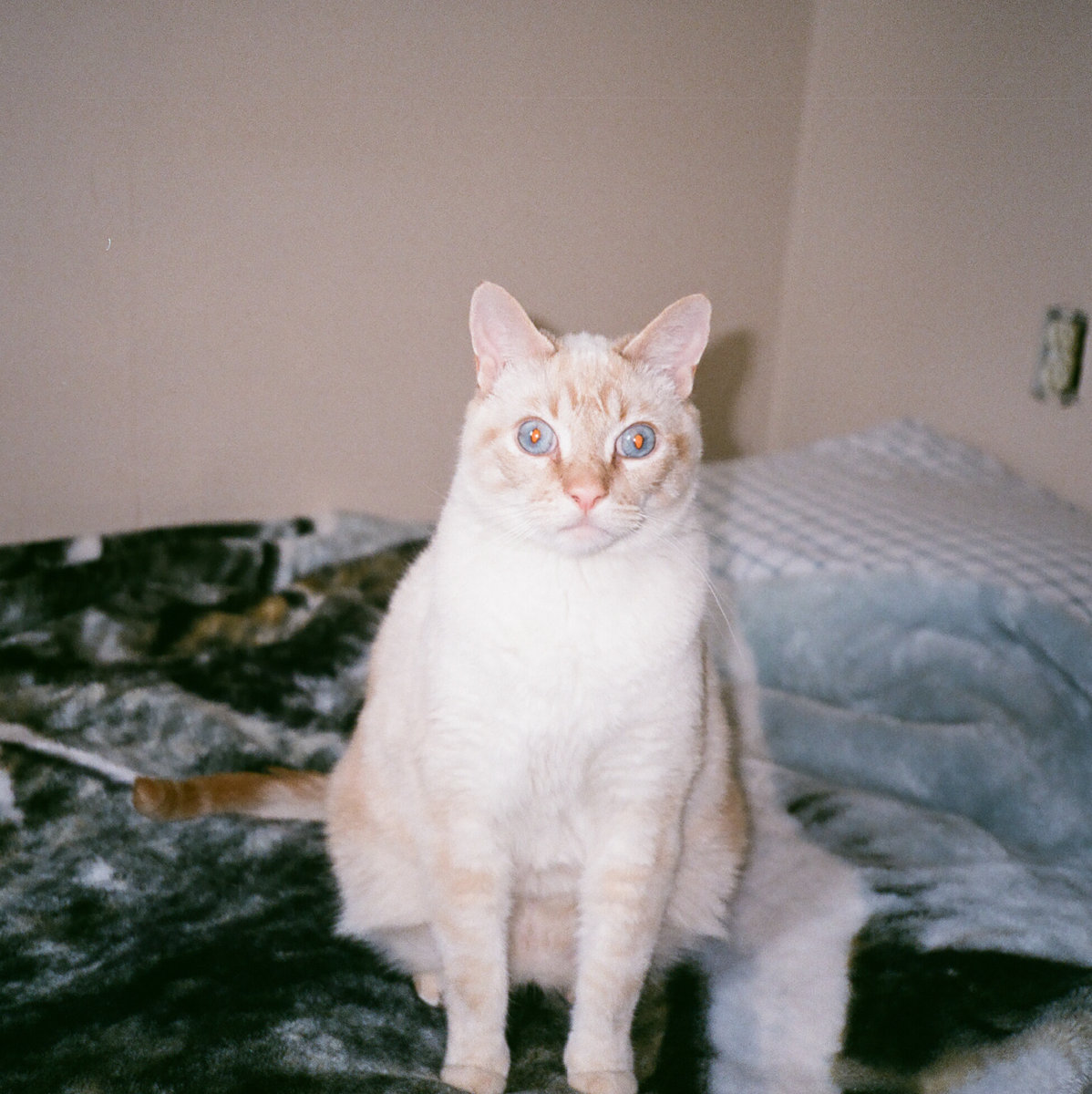
I love experimental pop songs like these proposed to us by <<Tedwyn James>>. and in summer I love them even more. <Mingus, You> is a Lp of 10 wonderful tracks that will become one of your favorite albums of this summer. I bet
0. name of the band
Tedwyn James is the name of the music. My name is Choicey.
1. where are you from?
I was born in Ottawa. I grew up in Edmonton. I live in Vancouver. I am from Canada.
2. what kind of instruments/equipment you use? do you use some particular record technique? which is your method of composition?
Physical instruments are played and recorded: guitars, a Wurlitzer, and an amplifier with a broken reverb tank that I still need to fix. My recording philosophy is to place a microphone where it sounds good enough then I leave it. I don't think much about it partly because I write, record, and revise at the same time. Sometimes it sounds terrible. Other times there are some pretty mistakes.
3. what do you think about the music context nowadays and how you place yourself in? do you feel a part of any scene?
Music is open and fluid. Listen to what moves you. Play what makes you feel. I don't think much about being part of a scene. My friends play and listen to all types of great music so I hang out with them and learn. I meet different people and get exposed to different sounds that way.
4. do you think that nowadays has still sense talking about "underground"?
No. Everything is at ground level or in the clouds so it's all relative.
5. do you play live? how does the public react to your music?
The first live show will be on July 21 at an art space in town. I've never played in front of humans before, only cats, dogs, and raccoons that wander into my room.
6. Genesis P-Orridge said "Our records were documents of attitudes and experiences and observations by us and other determinedly individual outsiders. Fashion was an enemy, style irrelevant.". What do your records represent to you?
My recordings are uncoordinated experiences and thoughts filtered through sound.
0. name of the band
Tedwyn James is the name of the music. My name is Choicey.
1. where are you from?
I was born in Ottawa. I grew up in Edmonton. I live in Vancouver. I am from Canada.
2. what kind of instruments/equipment you use? do you use some particular record technique? which is your method of composition?
Physical instruments are played and recorded: guitars, a Wurlitzer, and an amplifier with a broken reverb tank that I still need to fix. My recording philosophy is to place a microphone where it sounds good enough then I leave it. I don't think much about it partly because I write, record, and revise at the same time. Sometimes it sounds terrible. Other times there are some pretty mistakes.
3. what do you think about the music context nowadays and how you place yourself in? do you feel a part of any scene?
Music is open and fluid. Listen to what moves you. Play what makes you feel. I don't think much about being part of a scene. My friends play and listen to all types of great music so I hang out with them and learn. I meet different people and get exposed to different sounds that way.
4. do you think that nowadays has still sense talking about "underground"?
No. Everything is at ground level or in the clouds so it's all relative.
5. do you play live? how does the public react to your music?
The first live show will be on July 21 at an art space in town. I've never played in front of humans before, only cats, dogs, and raccoons that wander into my room.
6. Genesis P-Orridge said "Our records were documents of attitudes and experiences and observations by us and other determinedly individual outsiders. Fashion was an enemy, style irrelevant.". What do your records represent to you?
My recordings are uncoordinated experiences and thoughts filtered through sound.
venerdì 1 luglio 2016
Sounds from underground/File N°44
here we come again after a long break. and we come back with a wonderful project from Poland called <<CRØSSENS>>. funeral pop that to me has also some kind of outsider music approach and that makes it so so good. surely not obvious sounds and that's another reason why you'll love it.
0. name of the band
CRØSSENSE
1. where are you from?
Poland
2. what kind of instruments/equipment you use? do you use some particular record technique? which is your method of composition?
Oh, it'll be fail but... I can't play any instruments. But, hm, I'm using virtual instruments like piano or violin. I'm trying to make my compositions by matching the sounds. If they sound good, they match, then I leave it and find another sounds to mix with them. It's really nice process because I got a lot of sounds that don't match to my vision but sound cool so I save them for another song or even another project.
3. what do you think about the music context nowadays and how you place yourself in? do you feel a part of any scene?
Hm... me finding in a music context... That's interesting. I think I'm not a part of any scenes now. Yeah, of course we can say that my music is alternative or give my songs another tags but I don't know if they always be like that. I can't say that tomorrow I will make another song with piano because I can do something totally electronic. I think music nowadays is really interesting because we have so many measures that we can use and we don't need to limit ourselves. Ain't it amazing?
4. do you think that nowadays has still sense talking about "underground"?
Yes, totally! But I think underground could be anything right now. For example public opinions. We see on TV, Internet and other media very popular opinions, popular points of view and there are other people who think in different way. That's underground for me. Something different from these things we can see really quick by only turning the TV on. We see only materials about Muslim terrorism attacks and a lot of people aren't aware of the fact that Muslims are also the victims and there are organizations like RIRA. But if they want, they can check it. But they won't find it so clear on the net or radio. Same thing is with music. We can listen to good songs by only typing 'popular songs 2016' in the Google but if we want to discover some new interesting sounds, we need to spend much more time to find it. That's the underground for me. Something different and something not so easy and obvious.
5. do you play live? how does the public react to your music? Well, I don't. It could be amazing to connect with public and play they my songs live but I didn't have an opportunity to present my music live. Well, maybe if we'll count some parties with friends but for bigger crowd... I haven't played yet. Maybe it'll change someday, who knows!
6. Genesis P-Orridge said "Our records were documents of attitudes and experiences and observations by us and other determinedly individual outsiders. Fashion was an enemy, style irrelevant.". What do your records represent to you?
I would say my music represents me, my feelings. I'd love to have skills to describe the world I see, everyday situations but it's not so easy. When I focus on my emotions I know I can say a lot so it becomes to me so simply. I sing about myself and I also sing about the situations from the world, for example in 'Questions'. There are some incidents that I cannot leave without my opinion. So... yeah, mostly ma experiences are the inspiration for my records.

0. name of the band
CRØSSENSE
1. where are you from?
Poland
2. what kind of instruments/equipment you use? do you use some particular record technique? which is your method of composition?
Oh, it'll be fail but... I can't play any instruments. But, hm, I'm using virtual instruments like piano or violin. I'm trying to make my compositions by matching the sounds. If they sound good, they match, then I leave it and find another sounds to mix with them. It's really nice process because I got a lot of sounds that don't match to my vision but sound cool so I save them for another song or even another project.
3. what do you think about the music context nowadays and how you place yourself in? do you feel a part of any scene?
Hm... me finding in a music context... That's interesting. I think I'm not a part of any scenes now. Yeah, of course we can say that my music is alternative or give my songs another tags but I don't know if they always be like that. I can't say that tomorrow I will make another song with piano because I can do something totally electronic. I think music nowadays is really interesting because we have so many measures that we can use and we don't need to limit ourselves. Ain't it amazing?
4. do you think that nowadays has still sense talking about "underground"?
Yes, totally! But I think underground could be anything right now. For example public opinions. We see on TV, Internet and other media very popular opinions, popular points of view and there are other people who think in different way. That's underground for me. Something different from these things we can see really quick by only turning the TV on. We see only materials about Muslim terrorism attacks and a lot of people aren't aware of the fact that Muslims are also the victims and there are organizations like RIRA. But if they want, they can check it. But they won't find it so clear on the net or radio. Same thing is with music. We can listen to good songs by only typing 'popular songs 2016' in the Google but if we want to discover some new interesting sounds, we need to spend much more time to find it. That's the underground for me. Something different and something not so easy and obvious.
5. do you play live? how does the public react to your music? Well, I don't. It could be amazing to connect with public and play they my songs live but I didn't have an opportunity to present my music live. Well, maybe if we'll count some parties with friends but for bigger crowd... I haven't played yet. Maybe it'll change someday, who knows!
6. Genesis P-Orridge said "Our records were documents of attitudes and experiences and observations by us and other determinedly individual outsiders. Fashion was an enemy, style irrelevant.". What do your records represent to you?
I would say my music represents me, my feelings. I'd love to have skills to describe the world I see, everyday situations but it's not so easy. When I focus on my emotions I know I can say a lot so it becomes to me so simply. I sing about myself and I also sing about the situations from the world, for example in 'Questions'. There are some incidents that I cannot leave without my opinion. So... yeah, mostly ma experiences are the inspiration for my records.
mercoledì 15 giugno 2016
Echos of underground/Cult Lust
Two new tracks from <<Cult Lust>> that we've already known as <Drearian>. it digs as always
venerdì 27 maggio 2016
Self portrait/Female Figure I

<<Female Figure I>>. Trash on cartoon. May, 2016. BR
 |
| Female Figure I |
 |
| Female Figure I, detail |
 |
| Female Figure I, detail |
 |
| Female Figure I, detail |
 |
| Female Figure I, detail |
 |
| Female Figure I, detail |
giovedì 19 maggio 2016
Sounds from underground/File N°043
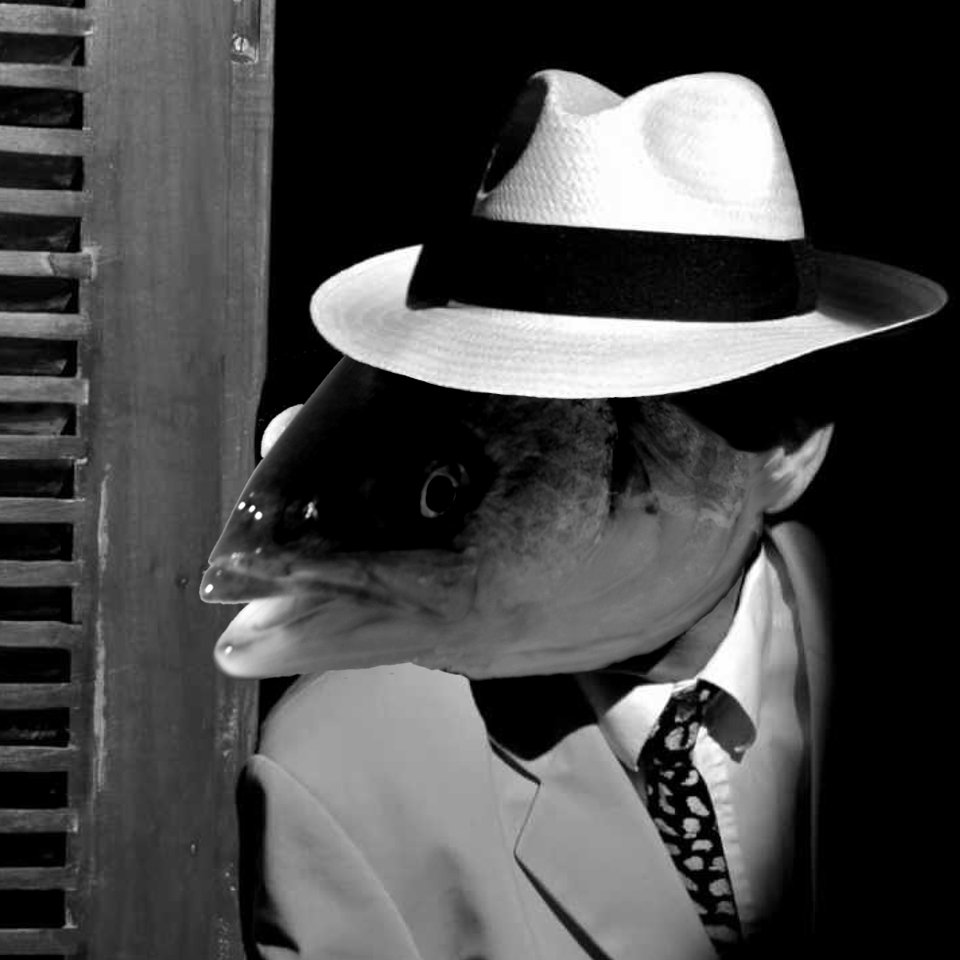
we're still in Australia to present you <<Secret Salmon>>, because weird is beautiful.
0. Name of the band?
Secret Salmon
1. Where are you from?
Australia
2. What kind of instruments/equipment you use? Do you use some particular record technique? Which is your method of composition?
It is very important to unclog the arteries of the Australian financial system. We've had a very stifled, non-competitive environment in banking. We've had four major banks, and a handful of state banks dominating the whole banking community of Australia.
3. What do you think about the music context nowadays and how you place yourself in? Do you feel a part of any scene?
Well, the fact is, if you go in to an Australian bank, you walk in as a mendicant – you walk in hoping the bank will do something for you. If you go in to a bank in any other country, you go in as a customer, there they’re glad to see you. Now, that’s going to change, that’s what’s going to happen in Australia.
4. Do you think that nowadays has still sense talking about "underground"?
If you want to start talking about equity and fairness, you better start with unemployment, but you can’t do it with a sick economy. Banking is the artery of economy and we’ve had hardening of the arteries for too long in this country.
5. Do you play live? How do public react to your music?
Well, when we see these foreign banks operate here, the competition will liven our banks up, and the fact that they thought there was perhaps an easy road to profits and earnings by not competing with one another too vigorously with services will come to an abrupt end.
6. Genesis P-Orridge said "Our records were documents of attitudes and experiences and observations by us and other determinedly individual outsiders. Fashion was an enemy, style irrelevant". What do your records represent to you?
Unemployment.
0. Name of the band?
Secret Salmon
1. Where are you from?
Australia
2. What kind of instruments/equipment you use? Do you use some particular record technique? Which is your method of composition?
It is very important to unclog the arteries of the Australian financial system. We've had a very stifled, non-competitive environment in banking. We've had four major banks, and a handful of state banks dominating the whole banking community of Australia.
3. What do you think about the music context nowadays and how you place yourself in? Do you feel a part of any scene?
Well, the fact is, if you go in to an Australian bank, you walk in as a mendicant – you walk in hoping the bank will do something for you. If you go in to a bank in any other country, you go in as a customer, there they’re glad to see you. Now, that’s going to change, that’s what’s going to happen in Australia.
4. Do you think that nowadays has still sense talking about "underground"?
If you want to start talking about equity and fairness, you better start with unemployment, but you can’t do it with a sick economy. Banking is the artery of economy and we’ve had hardening of the arteries for too long in this country.
5. Do you play live? How do public react to your music?
Well, when we see these foreign banks operate here, the competition will liven our banks up, and the fact that they thought there was perhaps an easy road to profits and earnings by not competing with one another too vigorously with services will come to an abrupt end.
6. Genesis P-Orridge said "Our records were documents of attitudes and experiences and observations by us and other determinedly individual outsiders. Fashion was an enemy, style irrelevant". What do your records represent to you?
Unemployment.
venerdì 13 maggio 2016
Sounds from underground/File N°042
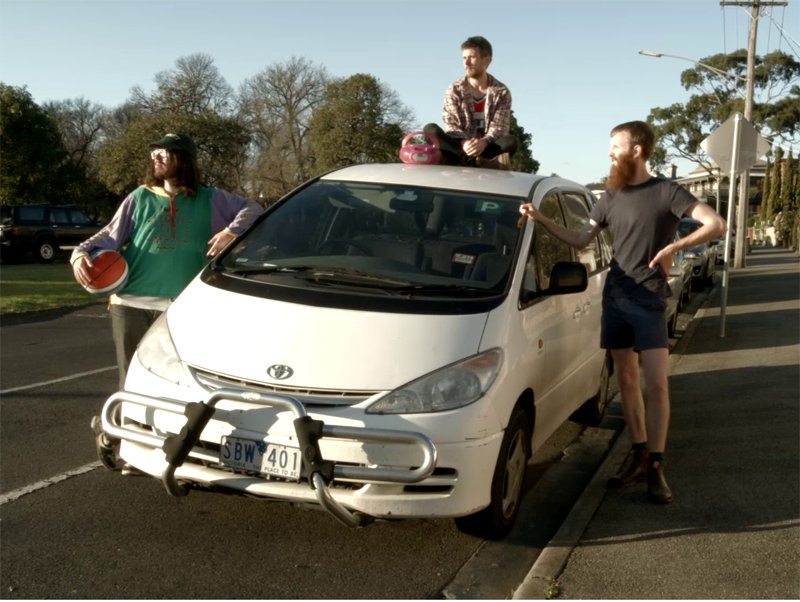
Australians do it better. When I look for the music on web and I see a tag "Australia" I'm pretty sure that it'll be done good, with taste and probably I'll like it. and that's what we can tell about <<The Parking Lot Experiments>>. experimental pop, of really, really very high quality, melodies are composed brilliantly, instrumental parts aren't banal, are fresh and original. <Beginnners> is one of this albums that you don't need to comment a lot, because is simply sooo good. and there's a lack of good music nowadays.
i n t e r v i e w
0. name of the band
The Parking Lot Experiments
1. where are you from?
Melbourne, Australia
2. what kind of instruments/equipment you use? do you use some particular record technique? which is your method of composition?
Drums, guitar, bass, and lots of electronics (software based)
3. what do you think about the music context nowadays and how you place yourself in? do you feel a part of any scene?
I think these days, for acts who are into things like hope and community, it's pretty hard to be "cool" - As for belonging in a scene, I reckon as the trends shifted over the years our little scene basically disappeared.
4. do you think that nowadays has still sense talking about "underground"?
Yep. Just be aware that "Mainstream = Bad" and "Underground = Good" are ideals that are way too simplistic and naive to live by forever.
5. do you play live? how public react to your music?
We've been playing live for years, and our live shows have always been a kind of celebration. There's a strange happiness that music brings us and we want other people to feel it too - sometimes it happens.
6. Genesis P-Orridge said "Our records were documents of attitudes and experiences and observations by us and other determinedly individual outsiders. Fashion was an enemy, style irrelevant.". What do your records represent to you?
High School was shit for me and music helped me through it and I want to help some kid in the same way. Our records are a shambolic collection and distillation of all sorts of musical influences from around the world, filtered through a sense of not-belonging, playfulness, questioning and hope. When you listen to our records, it can be a cathartic experience, but even when it is, you'll inevitably end up with more questions than you had before (cuz there's no such thing as a happy ending, really).
i n t e r v i e w
0. name of the band
The Parking Lot Experiments
1. where are you from?
Melbourne, Australia
2. what kind of instruments/equipment you use? do you use some particular record technique? which is your method of composition?
Drums, guitar, bass, and lots of electronics (software based)
3. what do you think about the music context nowadays and how you place yourself in? do you feel a part of any scene?
I think these days, for acts who are into things like hope and community, it's pretty hard to be "cool" - As for belonging in a scene, I reckon as the trends shifted over the years our little scene basically disappeared.
4. do you think that nowadays has still sense talking about "underground"?
Yep. Just be aware that "Mainstream = Bad" and "Underground = Good" are ideals that are way too simplistic and naive to live by forever.
5. do you play live? how public react to your music?
We've been playing live for years, and our live shows have always been a kind of celebration. There's a strange happiness that music brings us and we want other people to feel it too - sometimes it happens.
6. Genesis P-Orridge said "Our records were documents of attitudes and experiences and observations by us and other determinedly individual outsiders. Fashion was an enemy, style irrelevant.". What do your records represent to you?
High School was shit for me and music helped me through it and I want to help some kid in the same way. Our records are a shambolic collection and distillation of all sorts of musical influences from around the world, filtered through a sense of not-belonging, playfulness, questioning and hope. When you listen to our records, it can be a cathartic experience, but even when it is, you'll inevitably end up with more questions than you had before (cuz there's no such thing as a happy ending, really).
giovedì 12 maggio 2016
Sounds from ether/Mindnet Lab Technicians "Mindnetaya Symphonija Live"
a great performance by <<Mindnet Lab Technicians>>, an Italian noise project, more info about you'll find here https://www.facebook.com/mindnetlabtech/
mercoledì 11 maggio 2016

domenica 8 maggio 2016
Sounds from underground/File N°041
a Belgium noise project <<Be the Hammer>> is a exquisite sound propose. these wonderful compositions are much more than usually you expect from a common noise music. supreme.
0. name of the band
Be the Hammer, B_T_H in abbreviated form.
1. where are you from?
Belgium.
2. what kind of instruments/equipment do you use?
To answer this question I first need to explain a few things about how the project works. B_T_H started as a collaborative effort between Brussels-based musician Dominique Van Cappellen-Waldock, and myself. When I first met Dominique at a gig of our common friends JOHN 3:16 aka Philippe Gerber and Insect Ark aka Dana Schechter in Brussels, I became aware of some of her bands (Baby Fire, Von Stroheim) in which she sometimes plays the Theremin. Not as a prominent instrument though, more in addition to some rock-oriented instrumentations. I've always been fascinated with this instrument, so primitive in a way but full of possibilities at the same time,and I suggested to her the idea of recording an entire album using only the Theremin. Surprisingly enough, she agreed. We started recording improvised sessions in her home studio, she was playing the Theremin while I was using a looper to obtain very dense, multi-layered sounds, and a variety of effect pedals which made most of our takes sound very noisy, drone-like, soundscapes based. This was when the overall aesthetic of what was to become the first album, Tangled Mass, took shape. Then I got started with the next phase of our work: selecting, editing, processing and overdubbing extensively the raw material we acquired so far. None of the album's tracks is structured in any conventional way, nor is beat-driven by any mean, but they all do have some sort of constructed, consciously assembled approach to them, and that aspect of the music was defined at that moment. It was just me and my computer for the most part, using a DAW software and plug-ins. Afterwards I wrote lyrics and we recorded Dominique voice's on three of the six tracks, which were then mixed by my pal Nicolas Surra Spadea and mastered by another pal, Samuel Cloet.
More recently I started recording new material alongside a guitarist, Jean-Marc Nicoletti (aka Unidentified Sonic Attack), and B_T_H is now taking a whole new direction. This time I'm in charge of the electronics (synths [a Korg Minilogue for the most part],sampler), lyrics and vocals, Jean-Marc plays his guitar, then we process his riffs and drones through various effects (I'm currently experimenting with granular synthesis plug-ins among other tools) and as Jean-Marc is a gifted sound engineer as well, we handle the production together.
3. what do you think about the music context nowadays and how do you place yourself in? do you feel a part of any scene?
First of all I think the current state of the music world is endlessly fascinating and challenging, with the incredible number of new artists emerging, and of new records being put out everyday. The ability these artists have to cut the middlemen and share their music with an audience directly through platforms such as Bandcamp among others, is also great. As long as such a vivid, adventurous indie scene will exist, I won't consider the music world to be undergoing some kind of crisis, just because it became harder to sell records. Wake up,people: it has ALWAYS been hard to be a professional musician and to make a decent living out of it, and this goes way back before the invention of recorded music. Enough said.
More specifically, the noise scene has fragmented itself into many hybrids nowadays,some of which I think are extremely exciting, some of which aren't at all. For example, artists such as Shapednoise are building bridges between noise and beat-driven electronic music,hopefully making it a bit less impenetrable for a broader audience. L.A.'s Crowhurst are also creating a fusion of their own, something fresh and exciting which combines noise, metal and other influences. In Berlin you have Slow Slow Loris and their one of a kind lyrical/melodic approach to noise/experimental music. Then there's this branch of noise music that's more related to electro-acoustic and tape music, that might be seen as coming from a more intellectual approach but can also deliver very visceral, well crafted noise pieces, from artists such as Benjamin Thigpen among others. All of these hybrid, innovative sounds are a constant inspiration to me. These artists don't seem to care about labeling their own music or fitting into a scene, they mostly care about creating something personal and sincere. This is what I'd like to achieve with B_T_H. On the other hand, some of the noise sub-genres that emerged lately, such as 'harsh noise wall' among others, are quite boring, and seem to be comprised of people caring more about fitting into a genre and repeating the same clichés over and over, than making something of their own. I have no interest in that at all.
4. which is your method of composition?
As opposed to the improvisational approach used for the first album that I explained above, for our current recordings we adopted a much more structured workflow. Every time we enter the studio we bring in ideas for composition, sounds and lyrics. These might not be fully developed ideas yet, but they give us a sense of direction and allow us to obtain a concrete result much faster, something that might not need a whole lot of further manipulations to resemble a final track. I believe it's a more dynamic and fulfilling way to write music and we intend to keep working that way in the future.
5. how is your recording approach? do you use some particular record technique?
When I record sketches at my place I just plug my synth and/or mic in my laptop through a small portable audio interface. It's a very rudimentary setup and I don't need much more. When we work on complete tracks with Jean-Marc though, we do it at his studio, which is much more heavily equipped. He has been a sound engineer for twenty years and acquired a lot of gear during that time: full racks of analog processors, effect pedals, synths, good microphones, and so on. Using all these machines is another source of inspiration in itself.Manipulating audio hardware fits our approach to what a cyberpunk author might call 'the man-machine interface', much more than any kind of software-based tools. We do use ProTools though, but mainly as if it was a big, powerful, flexible tape machine, only for recording and editing.
6. do you play live? how does the public react to your music?
B_T_H in its first incarnation, comprised of Dominique and myself, never performed live for a simple reason: it was always meant as a studio-based project, basically consisting of a 'virtual Theremin orchestra', and it would have been quite difficult to recreate it in a live environment. Besides, our first album often leans towards ambient compositions, and as passionate as I am about ambient, I often find it quite boring in the context of a live show, at least when it isn't combined to other elements, such as video projections for example, and I wouldn't want to ask people to pay to see something that would bore the crap out of me if I was in the audience.
For B_T_H in its current incarnation, comprised of Jean-Marc and myself, it's another story. The material we've been writing/recording lately already sounds/feels like it would be much more interesting to recreate in a live environment. We won't rush anything though: we'll only hit the stage when we feel ready to offer the audience something exciting.
7. Genesis P-Orridge said "Our records were documents of attitudes and experiences and observations by us and other determinedly individual outsiders. Fashion was an enemy, style irrelevant." What do your records represent to you?
As always, Gen spoke the truth. To me, recorded music is a way to freeze time and keep a trace of how you feel, how you see yourself and the world at that exact moment.Listening to these recordings again in the future might not feel as vital and relevant as when they were made, but it will still feel relevant to keep them with you and to share them with others on occasions, just like some people keep photographs of themselves in an album (something I could never relate to; I assume the way my memory works is more focused on sounds and impressions than on pictures). As a listener (which is how I define myself, more than anything), it's essential to be able to play the same record at different times of your life, in different moods, and see how it impacts you on a different way each time. And nowadays digital technology allows us to keep these recordings forever in an unaltered form, so we should take advantage of that privilege.

0. name of the band
Be the Hammer, B_T_H in abbreviated form.
1. where are you from?
Belgium.
2. what kind of instruments/equipment do you use?
To answer this question I first need to explain a few things about how the project works. B_T_H started as a collaborative effort between Brussels-based musician Dominique Van Cappellen-Waldock, and myself. When I first met Dominique at a gig of our common friends JOHN 3:16 aka Philippe Gerber and Insect Ark aka Dana Schechter in Brussels, I became aware of some of her bands (Baby Fire, Von Stroheim) in which she sometimes plays the Theremin. Not as a prominent instrument though, more in addition to some rock-oriented instrumentations. I've always been fascinated with this instrument, so primitive in a way but full of possibilities at the same time,and I suggested to her the idea of recording an entire album using only the Theremin. Surprisingly enough, she agreed. We started recording improvised sessions in her home studio, she was playing the Theremin while I was using a looper to obtain very dense, multi-layered sounds, and a variety of effect pedals which made most of our takes sound very noisy, drone-like, soundscapes based. This was when the overall aesthetic of what was to become the first album, Tangled Mass, took shape. Then I got started with the next phase of our work: selecting, editing, processing and overdubbing extensively the raw material we acquired so far. None of the album's tracks is structured in any conventional way, nor is beat-driven by any mean, but they all do have some sort of constructed, consciously assembled approach to them, and that aspect of the music was defined at that moment. It was just me and my computer for the most part, using a DAW software and plug-ins. Afterwards I wrote lyrics and we recorded Dominique voice's on three of the six tracks, which were then mixed by my pal Nicolas Surra Spadea and mastered by another pal, Samuel Cloet.
More recently I started recording new material alongside a guitarist, Jean-Marc Nicoletti (aka Unidentified Sonic Attack), and B_T_H is now taking a whole new direction. This time I'm in charge of the electronics (synths [a Korg Minilogue for the most part],sampler), lyrics and vocals, Jean-Marc plays his guitar, then we process his riffs and drones through various effects (I'm currently experimenting with granular synthesis plug-ins among other tools) and as Jean-Marc is a gifted sound engineer as well, we handle the production together.
3. what do you think about the music context nowadays and how do you place yourself in? do you feel a part of any scene?
First of all I think the current state of the music world is endlessly fascinating and challenging, with the incredible number of new artists emerging, and of new records being put out everyday. The ability these artists have to cut the middlemen and share their music with an audience directly through platforms such as Bandcamp among others, is also great. As long as such a vivid, adventurous indie scene will exist, I won't consider the music world to be undergoing some kind of crisis, just because it became harder to sell records. Wake up,people: it has ALWAYS been hard to be a professional musician and to make a decent living out of it, and this goes way back before the invention of recorded music. Enough said.
More specifically, the noise scene has fragmented itself into many hybrids nowadays,some of which I think are extremely exciting, some of which aren't at all. For example, artists such as Shapednoise are building bridges between noise and beat-driven electronic music,hopefully making it a bit less impenetrable for a broader audience. L.A.'s Crowhurst are also creating a fusion of their own, something fresh and exciting which combines noise, metal and other influences. In Berlin you have Slow Slow Loris and their one of a kind lyrical/melodic approach to noise/experimental music. Then there's this branch of noise music that's more related to electro-acoustic and tape music, that might be seen as coming from a more intellectual approach but can also deliver very visceral, well crafted noise pieces, from artists such as Benjamin Thigpen among others. All of these hybrid, innovative sounds are a constant inspiration to me. These artists don't seem to care about labeling their own music or fitting into a scene, they mostly care about creating something personal and sincere. This is what I'd like to achieve with B_T_H. On the other hand, some of the noise sub-genres that emerged lately, such as 'harsh noise wall' among others, are quite boring, and seem to be comprised of people caring more about fitting into a genre and repeating the same clichés over and over, than making something of their own. I have no interest in that at all.
4. which is your method of composition?
As opposed to the improvisational approach used for the first album that I explained above, for our current recordings we adopted a much more structured workflow. Every time we enter the studio we bring in ideas for composition, sounds and lyrics. These might not be fully developed ideas yet, but they give us a sense of direction and allow us to obtain a concrete result much faster, something that might not need a whole lot of further manipulations to resemble a final track. I believe it's a more dynamic and fulfilling way to write music and we intend to keep working that way in the future.
5. how is your recording approach? do you use some particular record technique?
When I record sketches at my place I just plug my synth and/or mic in my laptop through a small portable audio interface. It's a very rudimentary setup and I don't need much more. When we work on complete tracks with Jean-Marc though, we do it at his studio, which is much more heavily equipped. He has been a sound engineer for twenty years and acquired a lot of gear during that time: full racks of analog processors, effect pedals, synths, good microphones, and so on. Using all these machines is another source of inspiration in itself.Manipulating audio hardware fits our approach to what a cyberpunk author might call 'the man-machine interface', much more than any kind of software-based tools. We do use ProTools though, but mainly as if it was a big, powerful, flexible tape machine, only for recording and editing.
6. do you play live? how does the public react to your music?
B_T_H in its first incarnation, comprised of Dominique and myself, never performed live for a simple reason: it was always meant as a studio-based project, basically consisting of a 'virtual Theremin orchestra', and it would have been quite difficult to recreate it in a live environment. Besides, our first album often leans towards ambient compositions, and as passionate as I am about ambient, I often find it quite boring in the context of a live show, at least when it isn't combined to other elements, such as video projections for example, and I wouldn't want to ask people to pay to see something that would bore the crap out of me if I was in the audience.
For B_T_H in its current incarnation, comprised of Jean-Marc and myself, it's another story. The material we've been writing/recording lately already sounds/feels like it would be much more interesting to recreate in a live environment. We won't rush anything though: we'll only hit the stage when we feel ready to offer the audience something exciting.
7. Genesis P-Orridge said "Our records were documents of attitudes and experiences and observations by us and other determinedly individual outsiders. Fashion was an enemy, style irrelevant." What do your records represent to you?
As always, Gen spoke the truth. To me, recorded music is a way to freeze time and keep a trace of how you feel, how you see yourself and the world at that exact moment.Listening to these recordings again in the future might not feel as vital and relevant as when they were made, but it will still feel relevant to keep them with you and to share them with others on occasions, just like some people keep photographs of themselves in an album (something I could never relate to; I assume the way my memory works is more focused on sounds and impressions than on pictures). As a listener (which is how I define myself, more than anything), it's essential to be able to play the same record at different times of your life, in different moods, and see how it impacts you on a different way each time. And nowadays digital technology allows us to keep these recordings forever in an unaltered form, so we should take advantage of that privilege.
lunedì 2 maggio 2016

domenica 1 maggio 2016
Sounds from underground/File N°040
a bit of noise pop by <<Tatiana Butts>>. lovely lo-fi attitude and nice melodies. stay tuned!
0. name of the band
I'm a solo artist, and I haven't collaborated with anybody yet. my name is Tatiana Butts but you can refer to me as Tatiana :)
1. where are you from?
I'm originally from Canada and I have family all over the world, but I currently live in Italy.
2. what kind of instruments/equipment you use? do you use some particular record technique? which is your method of composition?
as for instruments, I use my guitar & my voice (planning to get an electric drum set soon though!) and I seriously don't use any special equipment, I have my guitar amplifier and I use GarageBand on my MacBook Pro, my phone, and a set of headphones. I've only recently started making music and I can't afford buying expensive things right now so I try making songs with what I have.
my method of composition is writing my lyrics (I get ideas throughout the day which I make sure to write on a piece of paper and then into my songbook) then I come up with a melody and record it with my voice & guitar. sometimes I record spontaneously without even writing anything, like I did for "the back of basil's head".
3. what do you think about the music context nowadays and how you place yourself in? do you feel a part of any scene?
I think popular music nowadays is stirring towards hip-hop, electronic, "alternative rock" (i put this in quotation marks because i feel like this term has become very diluted, as many bands are referred to with this term to seem edgy and cool, when in reality their music resembles pop much more, but that's a different topic) and of course, pop, as always. as much as i do enjoy those genres when i'm in a particular mood, or just hanging out with my friends in general, i feel as though i do not belong in those categories as an artist. when i am alone, i tend to listen to lo-fi, noise pop, garage, fuzz, beach goth, funk and various similar genres. i do not feel like i can categorise my music in any sort of box because i love to experiment with different sounds, noises, lyrics and techniques. i am quite new to actually creating music, therefore i definitely do not feel part of any scene. (only very few of my friends & family know about my music because I'm to embarrassed haha)
4. do you think that nowadays has still sense talking about "underground"?
yes! i think many "underground" musicians can be found on bandcamp or on the internet in general, as they're free methods of expanding your fanbase. there are many similar artists to me and they use the same cheap quality instruments and equipment as me, as opposed to famous people who can afford to use high quality equipment. that's what's underground to me.
5. do you play live? how public react to your music?
I do not play live (yet)
6. Genesis P-Orridge said "Our records were documents of attitudes and experiences and observations by us and other determinedly individual outsiders. Fashion was an enemy, style irrelevant.". What do your records represent to you?
whenever i feel something, whether that being happiness, sadness, anger, weakness, strength... i write. i love to write poems, and that's how i express myself. i never used to show anything to people because i fear that when i put out my art, i lose control of it. rather than being in my hands, the control goes into the hands of my audience, who will always have a reaction, whether it be positive or negative. i used to fear that reaction. i recently, i gave up worrying about this reaction, so I've turned my poems into songs as an easier way of listening to what i have to say rather that reading it. to conclude, i can surely state that my reason for making music is to express myself and relate to other people who feel the same.

0. name of the band
I'm a solo artist, and I haven't collaborated with anybody yet. my name is Tatiana Butts but you can refer to me as Tatiana :)
1. where are you from?
I'm originally from Canada and I have family all over the world, but I currently live in Italy.
2. what kind of instruments/equipment you use? do you use some particular record technique? which is your method of composition?
as for instruments, I use my guitar & my voice (planning to get an electric drum set soon though!) and I seriously don't use any special equipment, I have my guitar amplifier and I use GarageBand on my MacBook Pro, my phone, and a set of headphones. I've only recently started making music and I can't afford buying expensive things right now so I try making songs with what I have.
my method of composition is writing my lyrics (I get ideas throughout the day which I make sure to write on a piece of paper and then into my songbook) then I come up with a melody and record it with my voice & guitar. sometimes I record spontaneously without even writing anything, like I did for "the back of basil's head".
3. what do you think about the music context nowadays and how you place yourself in? do you feel a part of any scene?
I think popular music nowadays is stirring towards hip-hop, electronic, "alternative rock" (i put this in quotation marks because i feel like this term has become very diluted, as many bands are referred to with this term to seem edgy and cool, when in reality their music resembles pop much more, but that's a different topic) and of course, pop, as always. as much as i do enjoy those genres when i'm in a particular mood, or just hanging out with my friends in general, i feel as though i do not belong in those categories as an artist. when i am alone, i tend to listen to lo-fi, noise pop, garage, fuzz, beach goth, funk and various similar genres. i do not feel like i can categorise my music in any sort of box because i love to experiment with different sounds, noises, lyrics and techniques. i am quite new to actually creating music, therefore i definitely do not feel part of any scene. (only very few of my friends & family know about my music because I'm to embarrassed haha)
4. do you think that nowadays has still sense talking about "underground"?
yes! i think many "underground" musicians can be found on bandcamp or on the internet in general, as they're free methods of expanding your fanbase. there are many similar artists to me and they use the same cheap quality instruments and equipment as me, as opposed to famous people who can afford to use high quality equipment. that's what's underground to me.
5. do you play live? how public react to your music?
I do not play live (yet)
6. Genesis P-Orridge said "Our records were documents of attitudes and experiences and observations by us and other determinedly individual outsiders. Fashion was an enemy, style irrelevant.". What do your records represent to you?
whenever i feel something, whether that being happiness, sadness, anger, weakness, strength... i write. i love to write poems, and that's how i express myself. i never used to show anything to people because i fear that when i put out my art, i lose control of it. rather than being in my hands, the control goes into the hands of my audience, who will always have a reaction, whether it be positive or negative. i used to fear that reaction. i recently, i gave up worrying about this reaction, so I've turned my poems into songs as an easier way of listening to what i have to say rather that reading it. to conclude, i can surely state that my reason for making music is to express myself and relate to other people who feel the same.
giovedì 28 aprile 2016
Sounds from underground/File N°039
when we want something experimental but at the same time dynamic, something that rocks, usually we go to Australia. <Mineral Earth> is a 5 tracks album by the Melbourne's duo <<Rat Filth>>, released on April. it's noisy and it's pop, so you have no excuse to don't love it.
0. name of the band
Rat Filth
1. where are you from?
Melbourne, Australia
2. what kind of instruments/equipment you use? do you use some particular record technique? which is your method of composition?
We use drums, guitar and organ. We recorded it in our homes separately as we both used to live interstate. Out technique was that one of us would have an idea for a track record that and send it across and the other person would but there idea/s with it and that would be the song. So it was a quick process.
3. what do you think about the music context nowadays and how you place yourself in? do you feel a part of any scene?
We have only played a live 3 times. At this stage our context floats somewhere between the experiential, punk and art rock scene if that even is something.
4. do you think that nowadays has still sense talking about "underground"?
I see underground music as any music that is played outside venues in warehouse, houses and interesting spaces. It used to be very strong Melbourne and still seems to exist Here and there.
5. do you play live? how public react to your music?
Keen to play live more for sure. It initially started as a recording project so it has been interesting getting together. So far the live response was good.
6. Genesis P-Orridge said "Our records were documents of attitudes and experiences and observations by us and other determinedly individual outsiders. Fashion was an enemy, style irrelevant.". What do your records represent to you?
Our recordings represent an immediate feeling that is captured and quickly recorded, fragments of sounds, ideas that aren't thought out, intuitive responses slapped together. It is anti studio, and DIY a way of capturing something without to much thought.

0. name of the band
Rat Filth
1. where are you from?
Melbourne, Australia
2. what kind of instruments/equipment you use? do you use some particular record technique? which is your method of composition?
We use drums, guitar and organ. We recorded it in our homes separately as we both used to live interstate. Out technique was that one of us would have an idea for a track record that and send it across and the other person would but there idea/s with it and that would be the song. So it was a quick process.
3. what do you think about the music context nowadays and how you place yourself in? do you feel a part of any scene?
We have only played a live 3 times. At this stage our context floats somewhere between the experiential, punk and art rock scene if that even is something.
4. do you think that nowadays has still sense talking about "underground"?
I see underground music as any music that is played outside venues in warehouse, houses and interesting spaces. It used to be very strong Melbourne and still seems to exist Here and there.
5. do you play live? how public react to your music?
Keen to play live more for sure. It initially started as a recording project so it has been interesting getting together. So far the live response was good.
6. Genesis P-Orridge said "Our records were documents of attitudes and experiences and observations by us and other determinedly individual outsiders. Fashion was an enemy, style irrelevant.". What do your records represent to you?
Our recordings represent an immediate feeling that is captured and quickly recorded, fragments of sounds, ideas that aren't thought out, intuitive responses slapped together. It is anti studio, and DIY a way of capturing something without to much thought.
Iscriviti a:
Post (Atom)